

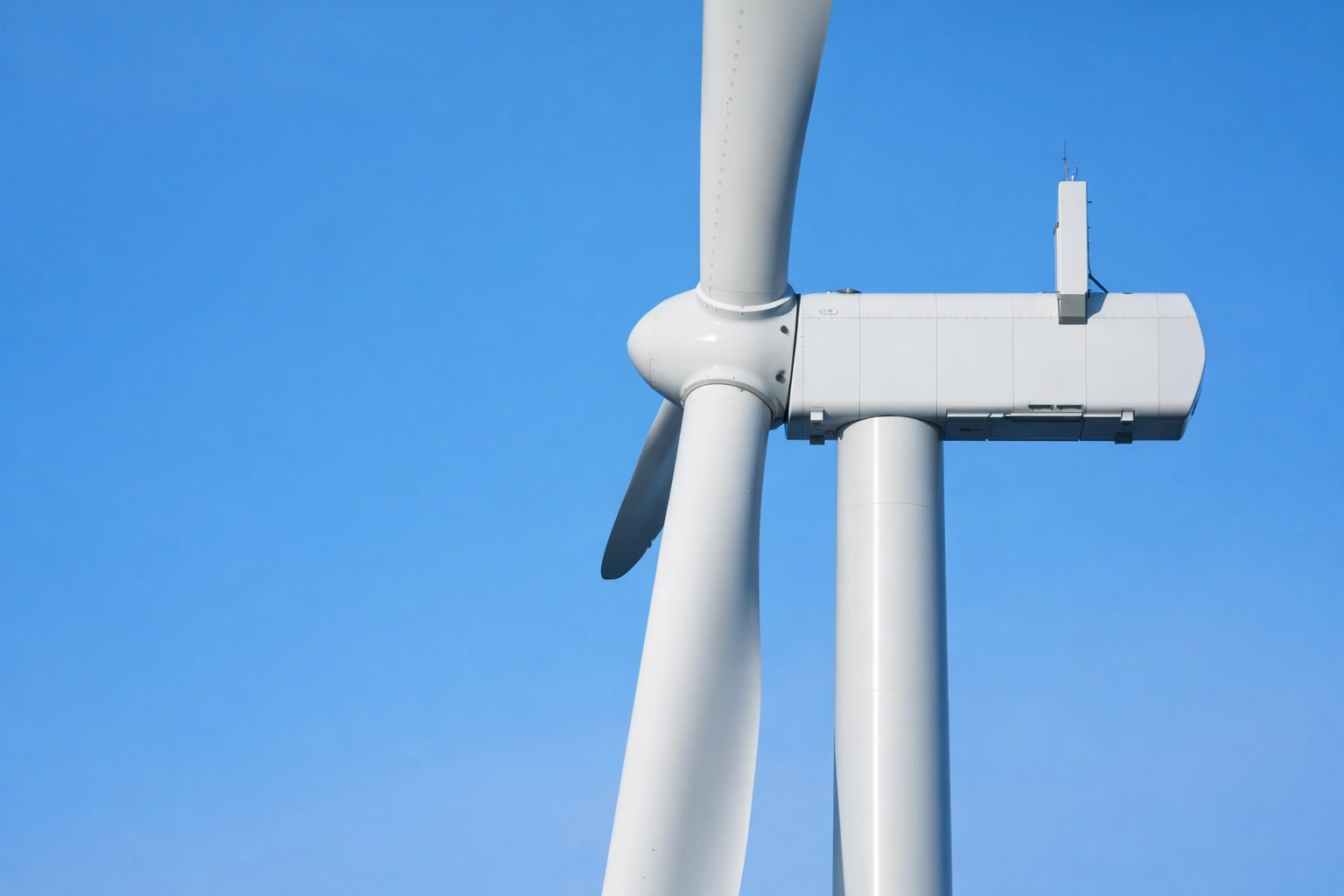
Introduction
Modern wind turbines are among the most complex pieces of rotating industrial equipment deployed at scale in Europe today. Whether installed onshore or offshore, their ability to deliver consistent energy output over a 20–25-year lifespan depends not only on aerodynamic efficiency, but on how well the major components of a wind turbine perform together as an integrated system.
As turbine ratings increase and operating environments become more demanding, European wind projects are placing greater emphasis on component reliability, manufacturing quality, and system integration. Understanding the role of each major component—and its impact on overall system performance – is therefore essential for OEMs, developers, and supply-chain partners alike.
This article breaks down the key wind turbine components, explaining how each contributes to performance, availability, and long-term operational efficiency.
1. Wind Turbine as a System, Not a Set of Parts
A wind turbine functions as a tightly coupled system. Mechanical, structural, and electrical components continuously interact under variable wind loads, temperature changes, and grid conditions. A weakness or mismatch in one component can cascade into:
- Reduced energy yield
- Increased vibration or wear
- Higher maintenance frequency
- Premature component failure
For Europe’s utility-scale wind fleet – particularly offshore – system performance is now as much about engineering execution and manufacturing consistency as it is about turbine design.
2. Rotor Blades: Energy Capture and Load Generation
Rotor blades are the primary interface between wind and machine. Their design directly influences:
- Annual energy production (AEP)
- Load distribution across the drivetrain
- Noise and environmental compliance
European wind turbines increasingly use longer blades to maximise yield, especially in low-to-medium wind regimes. However, longer blades also generate higher bending moments, increasing loads on the hub, main shaft, and tower.
From a system perspective, blade performance must be balanced with structural and mechanical component capabilities to avoid excessive fatigue.
3. Hub and Spinner: Load Transfer and Protection
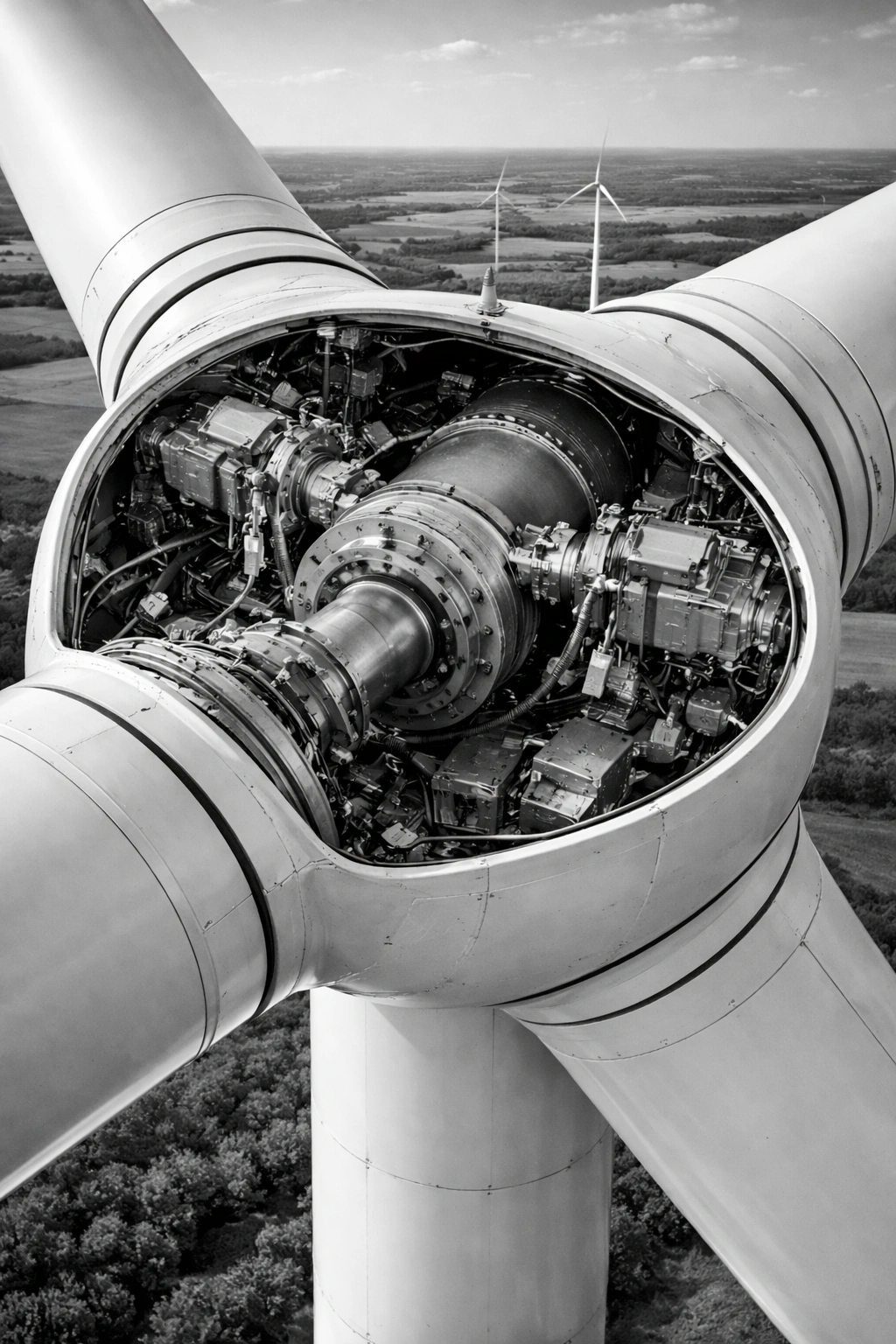
Rotor Hub
The hub connects the blades to the main shaft and distributes aerodynamic loads into the drivetrain. It must:
- Withstand high cyclic stresses
- Maintain dimensional stability
- Support pitch systems with high reliability
Hub performance has a direct influence on drivetrain alignment and bearing life.
Spinner
The spinner covers the hub and pitch mechanisms, protecting them from environmental exposure. While often overlooked, a well-designed spinner contributes to:
- Reduced moisture ingress
- Improved aerodynamic flow
- Lower maintenance requirements
4. Main Shaft and Bearings: Mechanical Load Path
The main shaft transmits rotational energy from the rotor to the drivetrain. Bearings supporting the shaft are among the most critical – and failure-prone – components in a wind turbine.
Their role in system performance includes:
- Managing combined radial and axial loads
- Maintaining alignment between rotor and generator
- Minimising frictional losses
In offshore wind turbines, bearing reliability is particularly critical due to limited access and high intervention costs.
5. Gearbox or Direct-Drive System: Speed Conversion
Gearbox-Based Systems
Many European wind turbines still use gearboxes to increase rotational speed before power generation. Gearboxes influence system performance by:
- Affecting efficiency losses
- Introducing vibration and thermal loads
- Dictating maintenance strategies
Precision manufacturing and quality control are essential to ensure long service life.
Direct-Drive Systems
Direct-drive turbines eliminate the gearbox, reducing mechanical complexity. While heavier and more material-intensive, they can offer:
- Lower maintenance requirements
- Improved reliability in offshore applications
The choice between gearbox and direct-drive configurations impacts the design and integration of multiple downstream components.
6. Generator: Electrical Energy Conversion
The generator converts mechanical energy into electrical power. Its performance affects:
- Electrical efficiency
- Thermal management requirements
- Grid compatibility
European wind turbines increasingly rely on generators optimised for variable speed operation, enabling better energy capture across fluctuating wind conditions.
Generator performance is tightly linked to cooling systems, control electronics, and enclosure design.
7. Power Electronics and Control Systems
Power electronics regulate voltage, frequency, and power quality before electricity is exported to the grid. These systems also manage:
- Pitch and yaw control
- Fault ride-through capability
- Grid code compliance
From a system standpoint, robust control systems improve:
- Turbine availability
- Response to grid disturbances
- Long-term component protection
Control panels and electrical enclosures housing these systems must withstand vibration, thermal cycling, and environmental exposure – particularly offshore.
8. Transformer and Grid Interface Components
Transformers step up the generated voltage to levels suitable for efficient transmission. Their placement – within the nacelle, tower base, or external substation – affects:
- Thermal performance
- Maintenance accessibility
- Structural load distribution
Transformers and associated electrical enclosures play a critical role in:
- Minimising electrical losses
- Ensuring grid compliance
- Supporting long-term operational reliability
9. Tower and Structural Assemblies
The tower supports the entire turbine system and positions the rotor at optimal wind height. Its role in system performance includes:
- Managing dynamic loads
- Damping vibration
- Housing internal cabling and access systems
As turbines grow taller, tower design increasingly influences:
- Transport and installation strategy
- Fatigue performance
- Overall system stability
Structural precision and weld quality directly affect long-term reliability.
10. Nacelle Structure and Enclosures
The nacelle houses and protects the drivetrain, generator, and electrical systems. Its design impacts:
- Component alignment
- Environmental protection
- Ease of maintenance
Well-engineered nacelle structures enable modular assembly and faster installation – an important factor in both onshore logistics and offshore vessel time.
11. Cable Management and Internal Routing
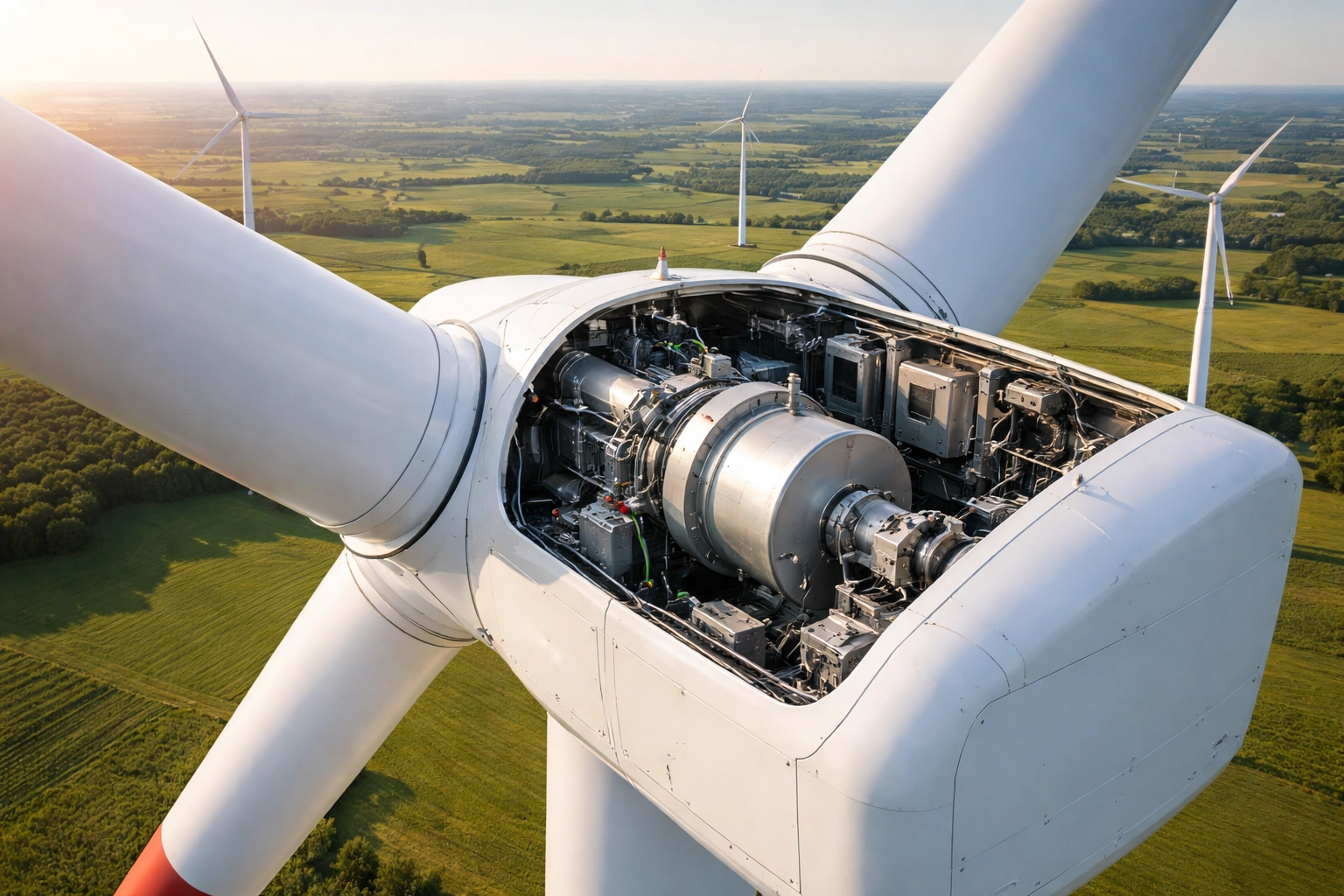
Cabling systems connect generators, converters, transformers, and control units. Effective cable management:
- Prevents mechanical damage
- Reduces fire and fault risk
- Improves maintenance safety
In offshore turbines, cable routing and enclosure integrity are especially critical due to moisture exposure and restricted access.
12. System Performance in Onshore vs Offshore Contexts
While the major components of a wind turbine remain broadly similar, their performance priorities differ:
- Offshore turbines prioritise durability, corrosion resistance, and minimal maintenance
- Onshore turbines emphasise transportability, installation speed, and cost optimisation
System performance is therefore shaped not just by component design, but by how those components are manufactured and integrated for specific operating environments.
Conclusion
The performance of a wind turbine is the result of how effectively its major components work together as a system. From rotor blades and hubs to generators, transformers, and structural assemblies, each component plays a defined role in energy capture, conversion, and delivery.
As Europe’s wind fleet grows in size and complexity, system-level thinking is becoming essential. Component reliability, manufacturing precision, and integration readiness now directly influence project economics and long-term asset value.
Unimacts supports the wind sector through precision – engineered structural and electrical components used across turbine assemblies and balance-of-plant systems. By aligning manufacturing execution with system performance requirements, Unimacts enables wind projects to scale while maintaining durability, consistency, and operational confidence.
FAQs
1. What are the major components of a wind turbine?
Key components include blades, hub, main shaft, drivetrain, generator, power electronics, transformer, tower, and nacelle structure.
2. Which components most affect wind turbine performance?
Rotor blades, drivetrain, generator, and control systems have the greatest influence on efficiency and availability.
3. How do component failures impact system performance?
Failure in one major component can lead to downtime, reduced energy output, and accelerated wear in connected systems.
4. Are offshore wind turbine components different from onshore?
Yes. Offshore components require enhanced corrosion protection, heavier structures, and higher reliability due to access constraints.
5. Why is manufacturing quality critical for wind turbine components?
Precision fabrication and consistent quality directly affect alignment, fatigue life, and long-term system reliability.