
Anupreethi
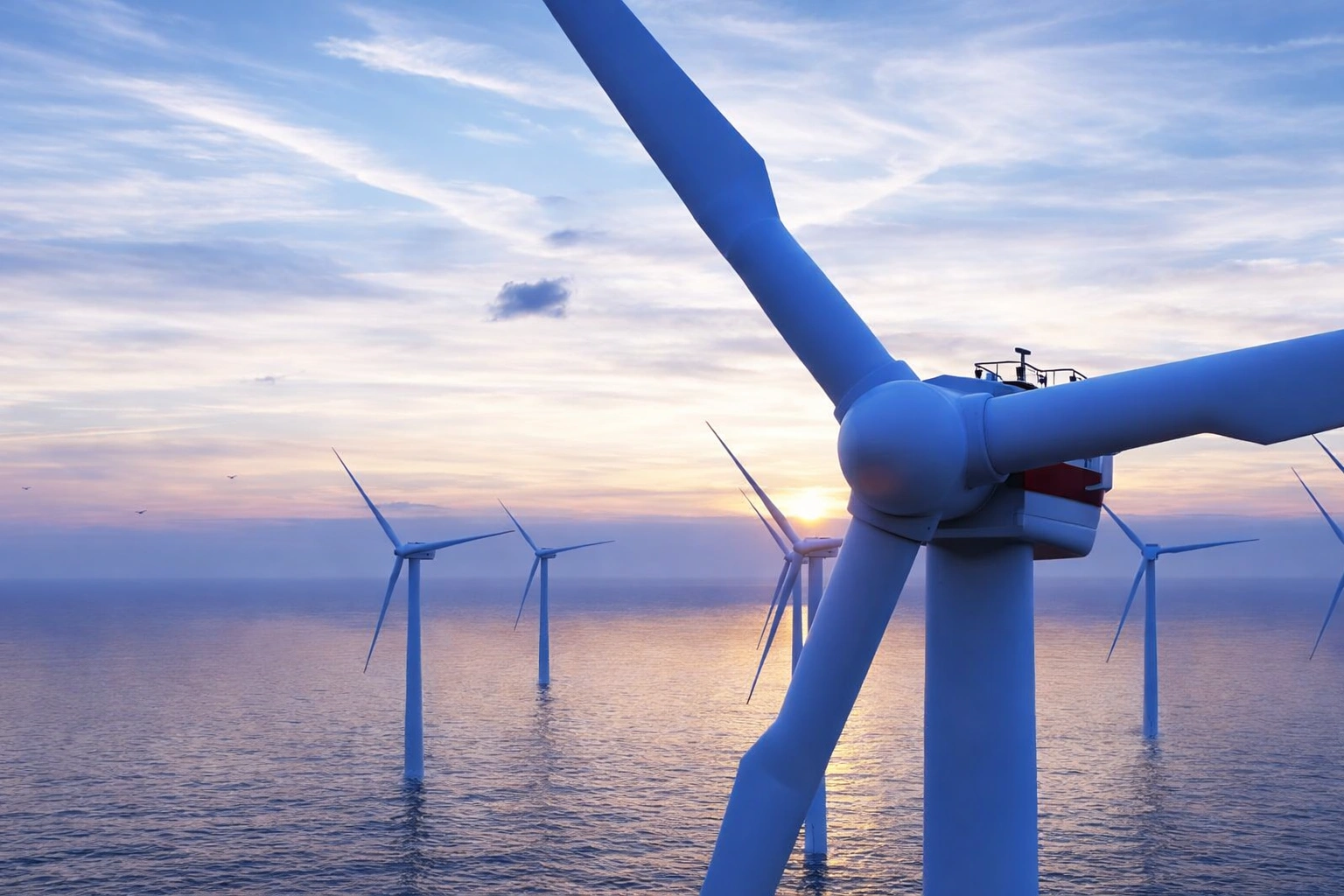
As Europe expands offshore wind capacity across deeper waters and larger turbine platforms, grid integration complexity is increasing. Offshore Wind Power Substations play a central role in collecting turbine output, transforming voltage levels, and transmitting electricity to onshore grids.
Unlike onshore substations, offshore installations operate under continuous marine exposure, limited maintenance access, and high structural loading. Electrical reliability and structural integrity must therefore be engineered as an integrated system.
From heavy structural foundations to high-voltage transformer integration, offshore substations demand fabrication precision, corrosion protection, and IEC-aligned manufacturing governance.
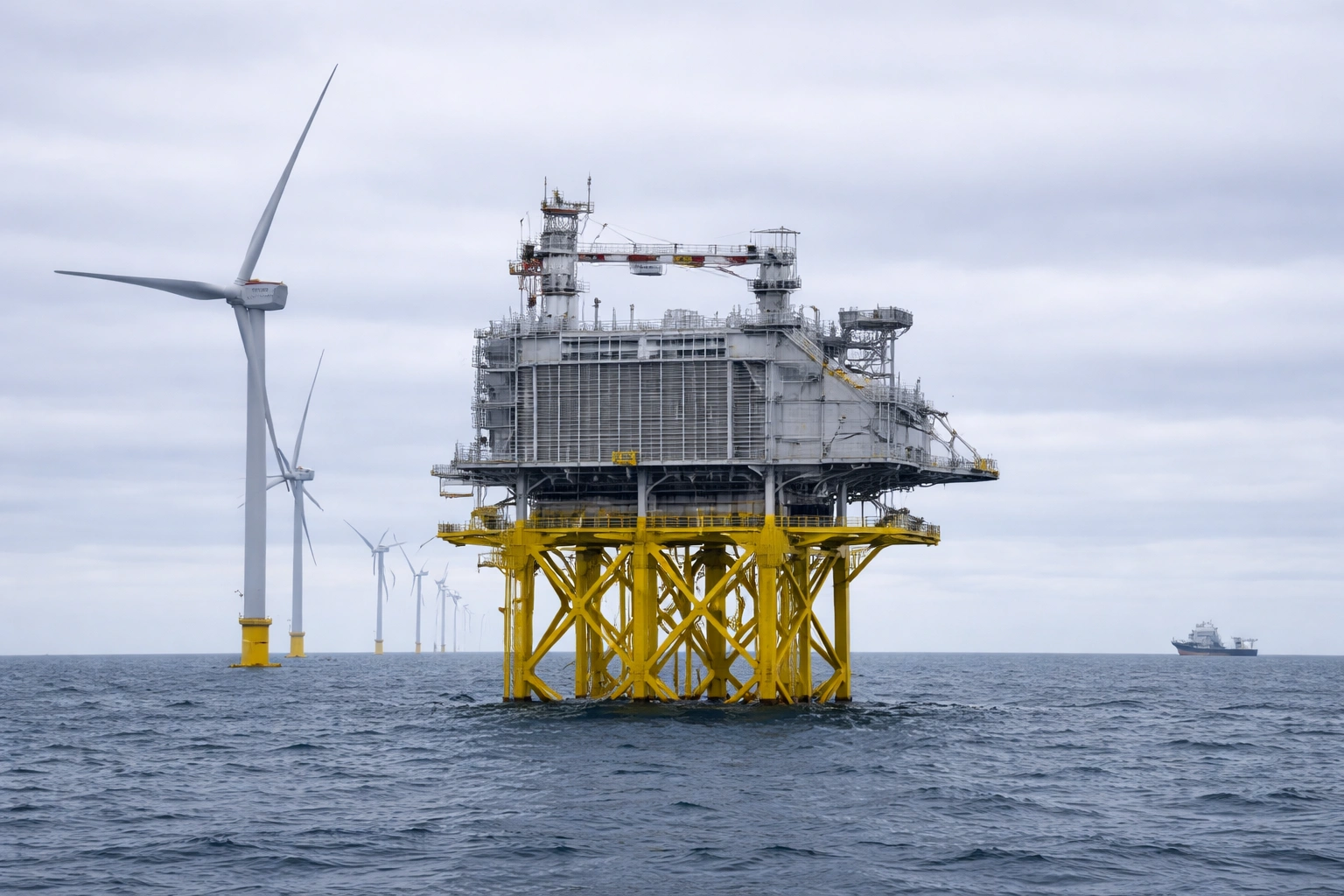
Offshore substations are typically mounted on:
These foundations must support:
Structural loads include:
Fabrication precision in heavy steel assemblies directly influences platform stability and equipment alignment.
Unimacts supports offshore wind programs through heavy structural fabrication capabilities, including large welded assemblies, load-bearing frames, and marine-aligned steel structures designed to maintain dimensional integrity under cyclic loading.
Transformers are central to Offshore Wind Power Substations. They step up voltage from turbine collection systems (typically 33–66 kV) to high-voltage transmission levels.
Engineering challenges include:
Thermal management is particularly complex offshore due to confined platform footprints and environmental sealing requirements.
Unimacts manufactures structural transformer tanks and heavy steel enclosures aligned with IEC standards, supporting precise mounting interfaces and thermal performance considerations required for offshore environments.
Offshore substations integrate:
Electrical systems must withstand:
Engineering responses include:
Unimacts produces precision sheet metal enclosures and structural supports for electrical systems, ensuring dimensional consistency and environmental sealing aligned to offshore performance standards.
Marine corrosion is one of the most significant lifecycle risks for Offshore Wind Power Substations.
Mitigation strategies include:
Coating thickness must be tightly controlled to prevent interference with bolted interfaces and structural tolerances.
Unimacts integrates corrosion-conscious fabrication processes, ensuring heavy structural assemblies maintain dimensional accuracy while meeting marine coating specifications required in European offshore projects.
Offshore substations require seamless integration between structural frames and electrical equipment.
Key interface considerations:
Poor alignment can result in vibration-induced stress on high-voltage systems.
Unimacts supports integrated fabrication of structural frames and electrical enclosure systems, enabling coordinated dimensional control across mechanical and electrical interfaces.
Offshore substations are typically fabricated onshore and transported via heavy-lift vessels.
Engineering must account for:
Large structural modules must be dimensionally validated before transport, as offshore corrective modifications are highly constrained.
Program-based fabrication planning and dimensional inspection frameworks are critical to reducing installation risk.
European Offshore Wind Power Substations operate under stringent regulatory oversight. Manufacturers must demonstrate:
Electrical failures offshore are costly due to access limitations and downtime exposure.
Unimacts operates with structured quality governance and documented inspection systems designed to support compliance across structural and transformer-adjacent manufacturing.
Offshore substations are designed for 25+ years of operation with restricted maintenance windows.
Engineering must prioritise:
Early-stage fabrication accuracy significantly influences lifecycle cost and reliability.
Heavy structural precision, enclosure integrity, and transformer integration discipline contribute to long-term offshore substation stability.
Offshore Wind Power Substations represent one of the most technically demanding elements in Europe’s renewable infrastructure. Electrical integration, structural durability, corrosion management, and thermal performance must operate cohesively under marine exposure.
Engineering success depends on disciplined fabrication, controlled welding processes, dimensional accuracy, and IEC-aligned electrical manufacturing.
Through heavy structural component production, precision sheet metal enclosure systems, and transformer-adjacent fabrication capabilities, Unimacts contributes to offshore wind power infrastructure aligned to European marine standards.
In an environment where downtime carries significant economic impact, engineering precision and manufacturing governance remain foundational to offshore substation reliability.
Explore fabrication strategies for Offshore Wind Power Substations aligned to Europe’s marine standards, combining structural precision, electrical integration, and long-term reliability.
1. What is the role of Offshore Wind Power Substations?
They collect turbine output, step up voltage, and transmit electricity to onshore grids.
2. Why are offshore substations structurally complex?
They must support heavy transformers and electrical systems while withstanding marine loading conditions.
3. What are the main electrical risks offshore?
Corrosion, condensation, thermal stress, and vibration exposure.
4. How is corrosion managed in offshore substations?
Through advanced coating systems, cathodic protection, and material selection.
5. Does Unimacts support offshore substation manufacturing?
Yes. Unimacts provides heavy structural fabrication, electrical enclosure systems, and transformer-aligned manufacturing capabilities for offshore wind infrastructure.