
Anupreethi
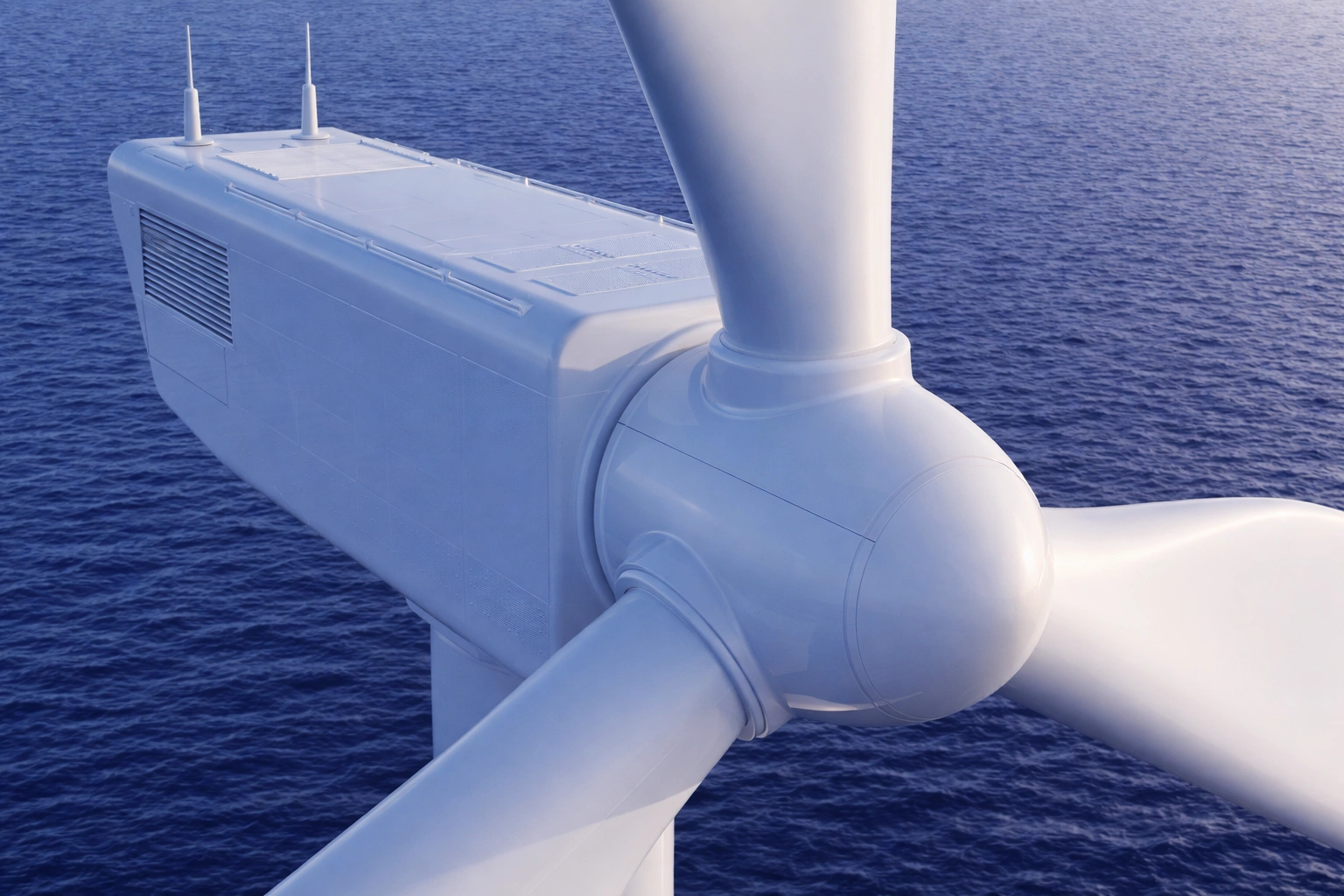
As Europe accelerates offshore wind deployment across the North Sea, Baltic Sea, and Atlantic corridors, foundation engineering has become central to project performance. In deeper waters, monopiles are often no longer sufficient. Jacket foundations—multi-leg lattice structures anchored to the seabed—are increasingly deployed to support high-capacity turbines in challenging marine environments.
Offshore jacket structures must withstand complex load combinations, corrosive exposure, and decades of operational stress. Structural precision, welding integrity, and marine-grade protection systems define long-term performance.
Within this ecosystem, engineered fabrication capability plays a decisive role. Unimacts supports offshore wind programs through heavy structural component manufacturing, precision welding, and corrosion-aligned fabrication processes tailored to European marine standards.
Jacket structures are lattice-type steel frameworks typically consisting of:
These structures distribute turbine loads into multiple seabed anchor points using driven piles. Jackets are commonly selected for:
The open lattice design reduces hydrodynamic loading compared to solid monopiles while maintaining structural stability.
Fabrication precision across nodes, braces, and leg intersections is critical to ensure load transfer efficiency and installation alignment.
Offshore jackets experience combined loading from:
Fatigue performance is a primary design consideration. Welded joints at brace intersections must endure cyclic stress over 20–25 years of operation.
Engineering priorities include:
Unimacts manufactures heavy structural wind components with controlled welding environments and dimensional inspection frameworks that support fatigue-resistant assemblies. Precision at the fabrication stage directly impacts offshore reliability.
Nodes—where multiple braces intersect—are among the most structurally critical points in a jacket foundation. These areas concentrate stress and require advanced welding execution.
Fabrication challenges include:
European offshore projects typically require:
Unimacts’ structural fabrication capabilities include heavy-section welding and inspection-driven quality governance aligned to European offshore compliance expectations.
Offshore jacket structures operate in highly corrosive environments. Engineering for marine durability involves:
Coating systems must be applied with precise thickness control to avoid dimensional deviation at bolted or interfaced connections.
Unimacts integrate corrosion-conscious fabrication practices, ensuring dimensional tolerances are maintained while accommodating coating specifications required for offshore deployment.
Between the jacket foundation and turbine tower sits the transition piece—another structurally critical component.
Transition pieces must:
Fabrication precision at this interface directly affects tower alignment and nacelle stability.
Unimacts manufactures structural assemblies and flange-integrated components designed for alignment accuracy and structural continuity between foundation and turbine systems.
Offshore jacket structures are typically fabricated onshore and transported via heavy-lift vessels to installation sites.
Design must consider:
Large welded assemblies must balance structural rigidity with transport feasibility.
Unimacts supports program-based fabrication planning that accounts for lift interfaces, dimensional validation, and structural reinforcement requirements aligned to offshore logistics.
Jacket foundations do not operate in isolation. They must integrate with:
Electrical continuity is essential. Offshore substations and transformer platforms further depend on structurally stable foundation systems.
Unimacts’ fabrication scope extends to structural assemblies that support cable routing structures, enclosure mounting interfaces, and transformer-adjacent components within offshore wind energy systems.
European offshore projects operate under rigorous regulatory and certification frameworks. Structural manufacturers must demonstrate:
Audit-ready production systems are essential to secure participation in offshore wind programs.
Unimacts operates with documented quality governance and inspection protocols structured to support compliance without compromising production efficiency.
Offshore jacket structures represent one of the most structurally demanding components in European wind projects. Their performance determines turbine stability, fatigue resistance, and long-term asset reliability.
Engineering priorities include weld integrity, node precision, corrosion protection, installation alignment, and lifecycle durability.
Through heavy structural fabrication, controlled welding environments, corrosion-conscious processes, and integration-ready component manufacturing, Unimacts contributes to offshore wind foundation systems aligned to European marine standards.
In an industry where structural failure risk is unacceptable and lifecycle performance defines project economics, disciplined engineering and fabrication precision remain foundational to offshore wind success.
1. What are offshore jacket structures used for?
They support wind turbines in deeper waters by distributing loads through a multi-leg lattice foundation anchored to the seabed.
2. Why are jacket structures preferred in deeper waters?
They provide improved stability and reduced hydrodynamic loading compared to monopiles at greater depths.
3. What is the most critical area in jacket fabrication?
Node intersections, where multiple braces connect, require high welding precision and fatigue resistance.
4. How is corrosion managed in offshore jackets?
Through multi-layer coating systems, cathodic protection, and corrosion allowance in design.
5. Does Unimacts manufacture offshore structural components?
Yes. Unimacts supports offshore wind programs through heavy structural fabrication, precision welding, and marine-aligned manufacturing processes.