
Anupreethi
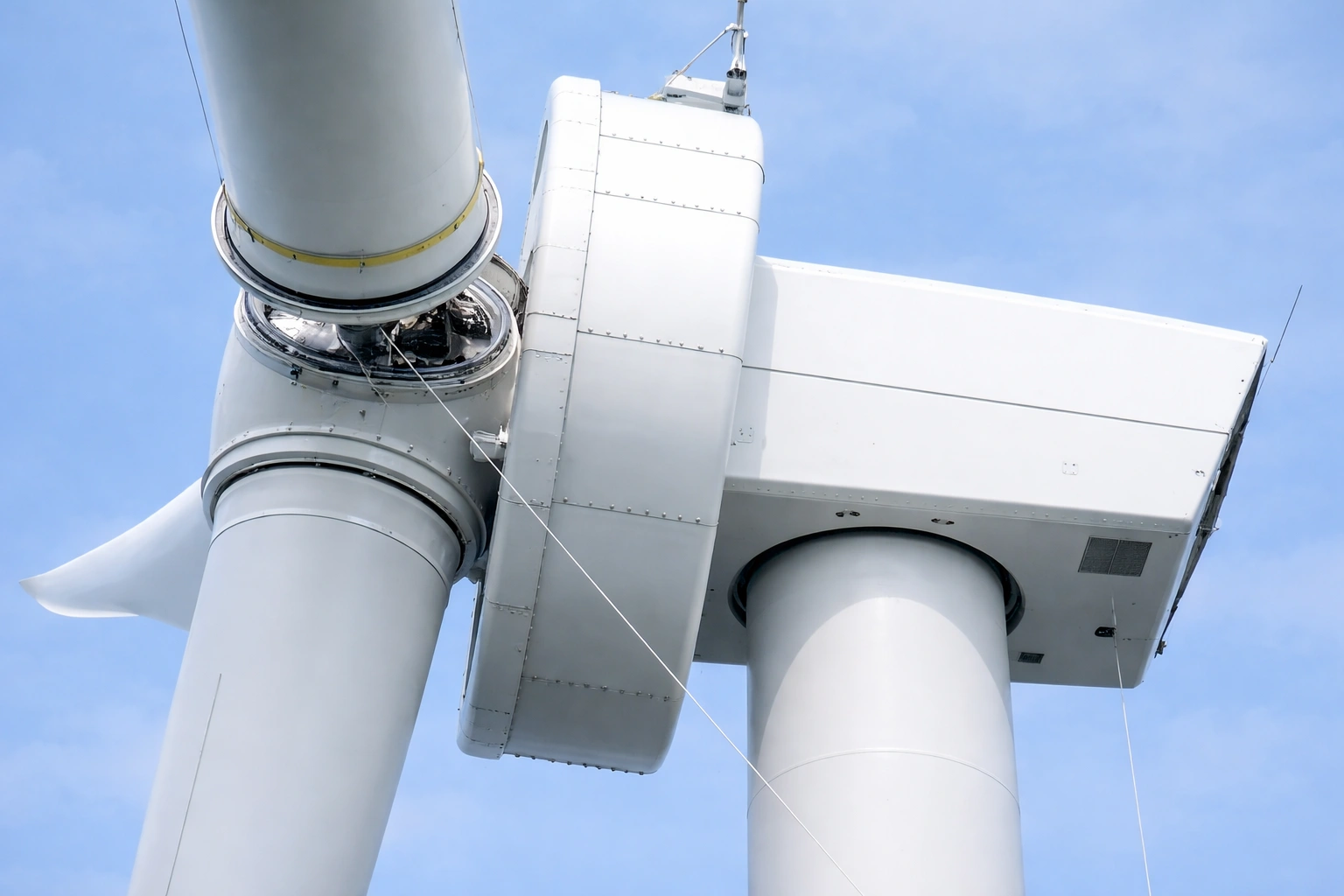
As Europe accelerates renewable energy deployment, electrical system sophistication inside modern turbines continues to increase. Today’s platforms integrate advanced conversion technology, digital monitoring, and grid compliance controls to ensure stable power injection.
Wind turbine electrical components form the backbone of this architecture. They manage energy conversion, regulate voltage and frequency, protect equipment, and enable seamless integration with transmission infrastructure.
Understanding how these components interact with grid interface systems is essential for OEMs, developers, and infrastructure partners operating across Europe’s onshore and offshore wind markets.
At the core of wind turbine electrical systems is the generator. Mechanical rotation from the rotor shaft drives electromagnetic conversion.
Modern European turbines typically use:
Key electrical challenges include:
Generator housings and structural supports must maintain alignment under dynamic loading. Unimacts manufactures structural assemblies and generator mounting frameworks designed to support dimensional stability and integration precision.
Wind generation produces variable frequency output. Power converters regulate this output to meet grid requirements.
Converter systems include:
These wind turbine electrical components perform:
Thermal management is critical. Converters generate substantial heat and require enclosure designs that support airflow and environmental protection.
Unimacts produces precision-fabricated electrical enclosures and cabinet systems engineered for vibration resistance, IP-rated sealing, and thermal optimisation.
Electrical protection systems prevent equipment damage and ensure operational safety.
Switchgear systems inside turbines and substations manage:
Both low-voltage (LV) and medium-voltage (MV) systems are integrated within turbine towers or nacelles before power is transmitted to offshore or onshore substations.
Structural enclosure accuracy plays a direct role in maintaining electrical clearances, insulation integrity, and mechanical stability.
Unimacts supports integration-ready switchgear housings and structural supports aligned with IEC-compliant manufacturing standards.
Electrical continuity depends on properly engineered cable management systems.
Critical components include:
Offshore wind turbine electrical components must also resist moisture ingress and salt exposure.
Fabrication precision ensures cable pathways maintain required bending radii and insulation clearances.
Unimacts manufactures structural supports and sheet metal assemblies that facilitate organised cable routing while maintaining environmental protection standards.
Grid interface systems ensure that wind-generated electricity aligns with transmission requirements.
Key systems include:
Transformers elevate turbine output voltage (typically 690V–33kV) to transmission levels (132kV and above). These systems are positioned at tower bases, offshore substations, or onshore grid points.
Unimacts supports transformer-adjacent manufacturing through structural tank fabrication, precision welding for oil-filled systems, and heavy steel enclosure production aligned to IEC standards.
This structural and electrical interface alignment strengthens integration between turbine systems and grid infrastructure.
In marine environments, wind turbine electrical components face additional risks:
Engineering responses include:
Electrical enclosure fabrication must account for coating thickness, gasket sealing integrity, and thermal management within constrained nacelle spaces.
Unimacts integrates corrosion-conscious fabrication practices to maintain dimensional stability and long-term durability under offshore exposure.
Modern turbines rely heavily on digital control systems to maintain grid compliance.
Electrical monitoring systems include:
These components enable:
Mechanical stability of mounting systems influences sensor accuracy. Precision structural fabrication therefore contributes indirectly to electrical reliability.
European wind projects must align with:
Electrical component fabrication must maintain required spacing, insulation clearances, and traceability documentation.
Unimacts operates within structured quality governance systems, supporting audit-ready manufacturing across structural and electrical enclosure components.
Wind turbine electrical components form a tightly integrated system spanning generation, conversion, protection, and grid interface functions. Their reliability determines turbine uptime, grid stability, and project economics.
Engineering challenges intensify in offshore environments where corrosion exposure and maintenance constraints elevate performance requirements.
Through precision structural fabrication, electrical enclosure manufacturing, cable support systems, and transformer-adjacent production, Unimacts contributes to wind energy infrastructure aligned with European performance and regulatory standards.
In a sector where grid compliance and reliability are non-negotiable, disciplined fabrication and integration-focused manufacturing remain central to wind system performance.
1. What are wind turbine electrical components?
They include generators, converters, switchgear, control systems, cable assemblies, and transformer interfaces.
2. Why are converters important in wind turbines?
They regulate frequency and voltage to meet grid-code requirements.
3. How do turbines connect to the grid?
Through step-up transformers, substations, and protection systems that elevate voltage and stabilise output.
4. What challenges affect offshore electrical systems?
Corrosion, condensation, vibration, and limited maintenance access.
5. Does Unimacts manufacture electrical components?
Unimacts manufactures structural enclosures, mounting systems, and transformer-adjacent components supporting wind turbine electrical integration.