

Anupreethi

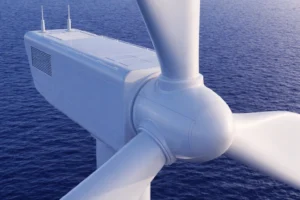
The nacelle is the operational core of a wind turbine, housing drivetrain systems, generators, electrical components, and control infrastructure. Within this environment, structural frames, spinner assemblies, and composite enclosures must function as an integrated system.
Modern turbine design requires balancing heavy structural fabrication with lightweight composite components. This combination ensures mechanical stability, aerodynamic efficiency, and protection of sensitive electrical systems.
Understanding how nacelle structures and composite elements interact is critical to improving turbine reliability and lifecycle performance.
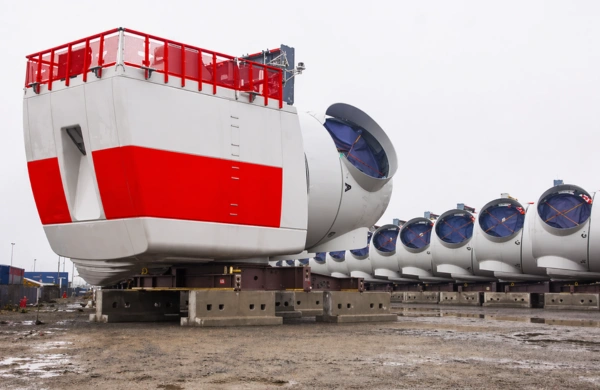
Nacelle structures provide the foundation for:
These structures must withstand:
Engineering priorities include:
Unimacts supports nacelle manufacturing through precision structural fabrication, ensuring stable mounting platforms for mechanical and electrical systems.
Spinner assemblies are mounted at the front of the nacelle, connected to the rotor hub.
Their functions include:
Spinner assemblies must be:
These components are typically manufactured using composite materials, allowing complex shapes and smooth aerodynamic profiles.
Composite enclosures are used within nacelles to protect electrical and control systems.
Applications include:
Composite materials offer:
Manufacturing processes involve mold-based fabrication and layered reinforcement to achieve required strength and durability.
Nacelle systems require precise integration between:
Integration challenges include:
Unimacts manufactures structural mounting systems and support frameworks that enable accurate positioning and stability of composite enclosures within nacelle assemblies.
Nacelle interiors experience temperature variation due to:
Composite enclosures must support:
Structural design must also allow proper ventilation pathways while maintaining enclosure integrity.
Continuous rotor movement introduces vibration across nacelle systems.
Both structural and composite components must account for:
Composite materials provide flexibility and resistance to corrosion, while steel structures provide rigidity and load-bearing capacity.
Balancing these material properties is essential for reliable system performance.
Wind turbine nacelle production requires coordination between:
Manufacturing alignment ensures:
Unimacts contributes through fabrication of integration-ready structural components that align with composite and electrical system requirements.
Wind turbine nacelle systems rely on a combination of structural steel frameworks, spinner assemblies, and composite enclosures to deliver reliable performance.
Each component category serves a distinct function—structural support, aerodynamic efficiency, and system protection—yet must operate as part of a unified system.
Through precision structural fabrication and integration-ready manufacturing, Unimacts supports nacelle assembly requirements aligned with modern wind turbine design and European operational standards.
1. What is the function of a nacelle structure?
It supports drivetrain components and houses electrical and control systems.
2. What are spinner assemblies made of?
Typically composite materials such as fiberglass.
3. Why are composite enclosures used in nacelles?
They provide insulation, corrosion resistance, and lightweight protection.
4. How are composite components integrated with steel structures?
Using precision mounting systems and structural supports.
5. Does Unimacts manufacture nacelle components?
Unimacts supports nacelle systems through structural fabrication and integration-ready assemblies.