
Anupreethi
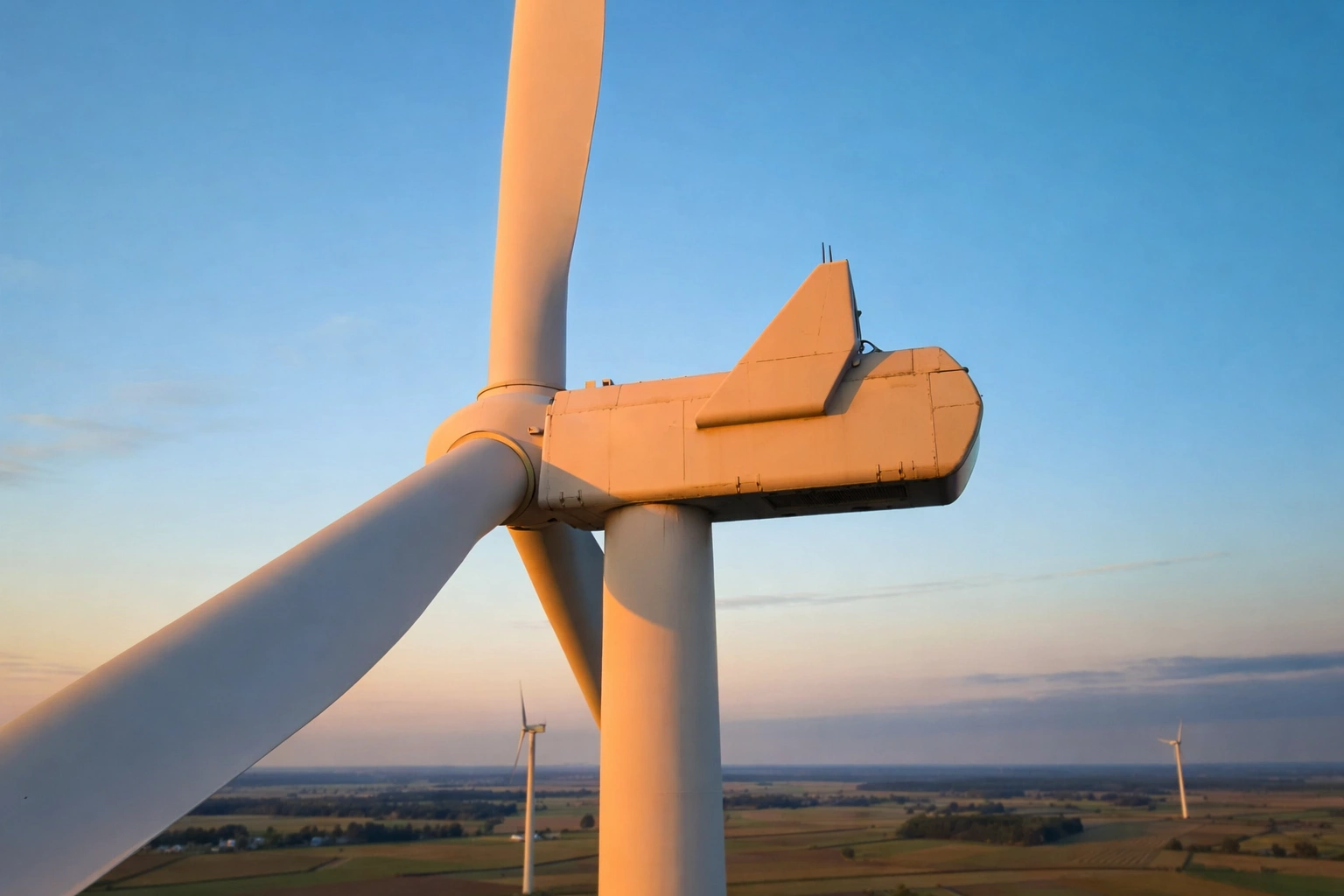
Modern wind turbines integrate a mix of metallic and composite components to optimise structural performance, electrical safety, and aerodynamic efficiency. Among these, FRP enclosures and spinner wind turbine components play a specialised role in protecting systems and improving turbine efficiency.
While heavy steel structures support load-bearing requirements, composite materials such as fiberglass reinforced plastic (FRP) are increasingly used in non-structural and aerodynamic applications where corrosion resistance, weight reduction, and insulation are critical.
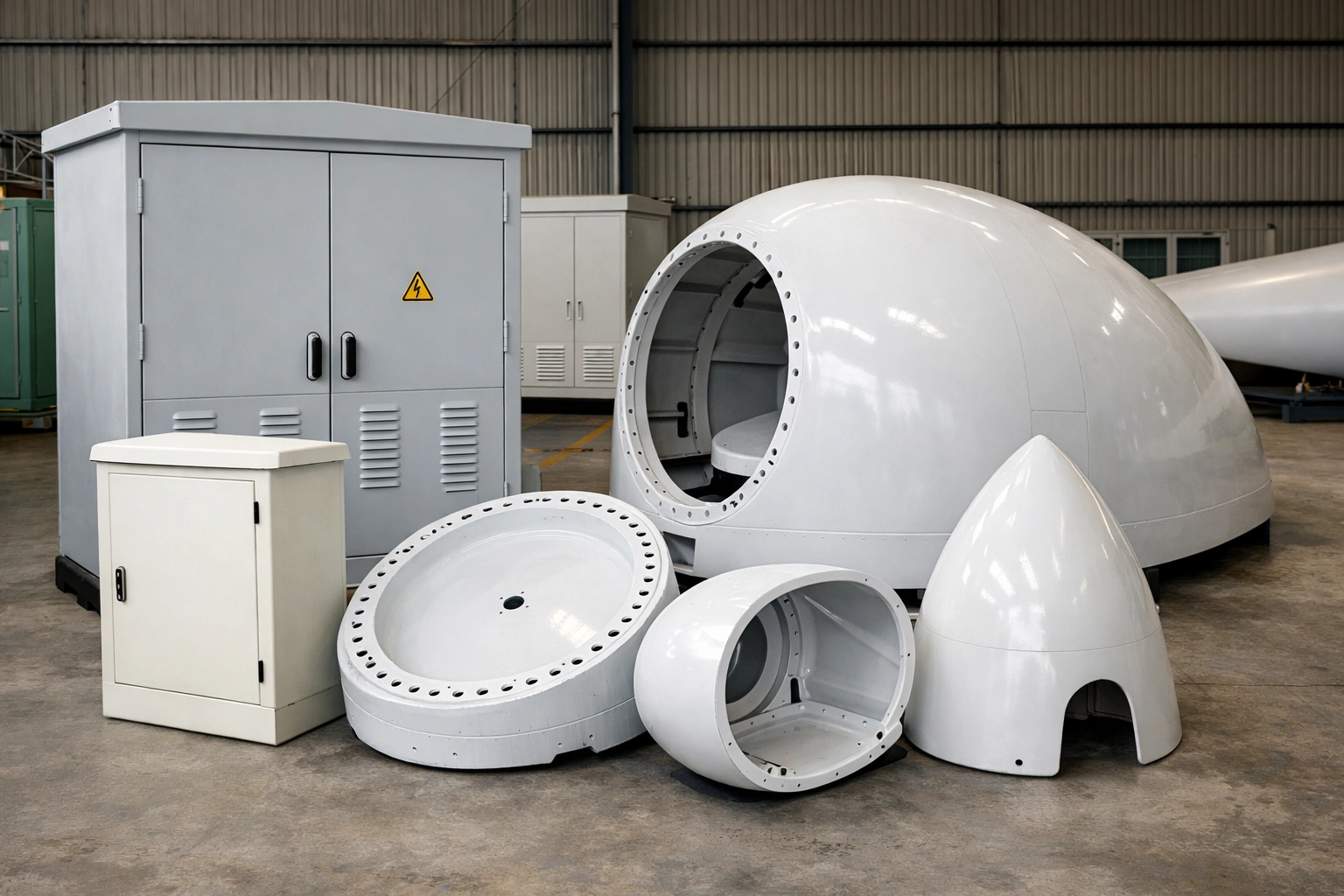
FRP enclosures are widely used in turbine systems for housing electrical and control components.
Typical applications include:
FRP offers:
These characteristics are particularly relevant in offshore and high-humidity environments where metallic enclosures require additional coating systems.
The spinner, mounted at the rotor hub, is a composite structure designed to:
Spinner wind turbine components are typically manufactured using:
Design priorities include:
Although not load-bearing, spinner performance contributes to overall turbine efficiency and protects critical hub systems.
Wind turbine systems require a combination of materials based on function.
FRP and composite materials are used for:
Steel fabrication is used for:
Unimacts supports this integration by manufacturing precision structural frames and mounting systems that enable secure installation of composite components within turbine assemblies.
FRP enclosures and spinner components must withstand:
Composite materials provide inherent resistance to corrosion without requiring protective coatings, making them suitable for long-term deployment in harsh environments.
FRP components must integrate seamlessly with metallic structures.
Key integration considerations include:
Precision in structural fabrication ensures that composite components maintain performance under operational conditions.
Unimacts contributes through fabrication of mounting systems and structural supports that enable stable integration of FRP-based components.
FRP component manufacturing involves:
While composite manufacturing differs from metal fabrication, system-level integration requires coordination between both domains.
FRP enclosures and spinner wind turbine components serve essential roles in modern wind energy systems, particularly in electrical protection and aerodynamic optimisation.
By combining composite materials with precision structural fabrication, wind turbines achieve improved durability, efficiency, and operational reliability.
Unimacts supports this ecosystem through engineered structural components and integration-ready assemblies that complement composite-based systems within European wind projects.
1. What are FRP enclosures used for in wind turbines?
They protect electrical and control systems from environmental exposure.
2. What is the function of a spinner?
It improves aerodynamics and protects hub components.
3. Are FRP components load-bearing?
No, they are typically used for non-structural applications.
4. Why are composites used in wind turbines?
They offer corrosion resistance and weight reduction.
5. Does Unimacts manufacture composite components?
Unimacts supports integration through structural fabrication and mounting systems.