
Anupreethi
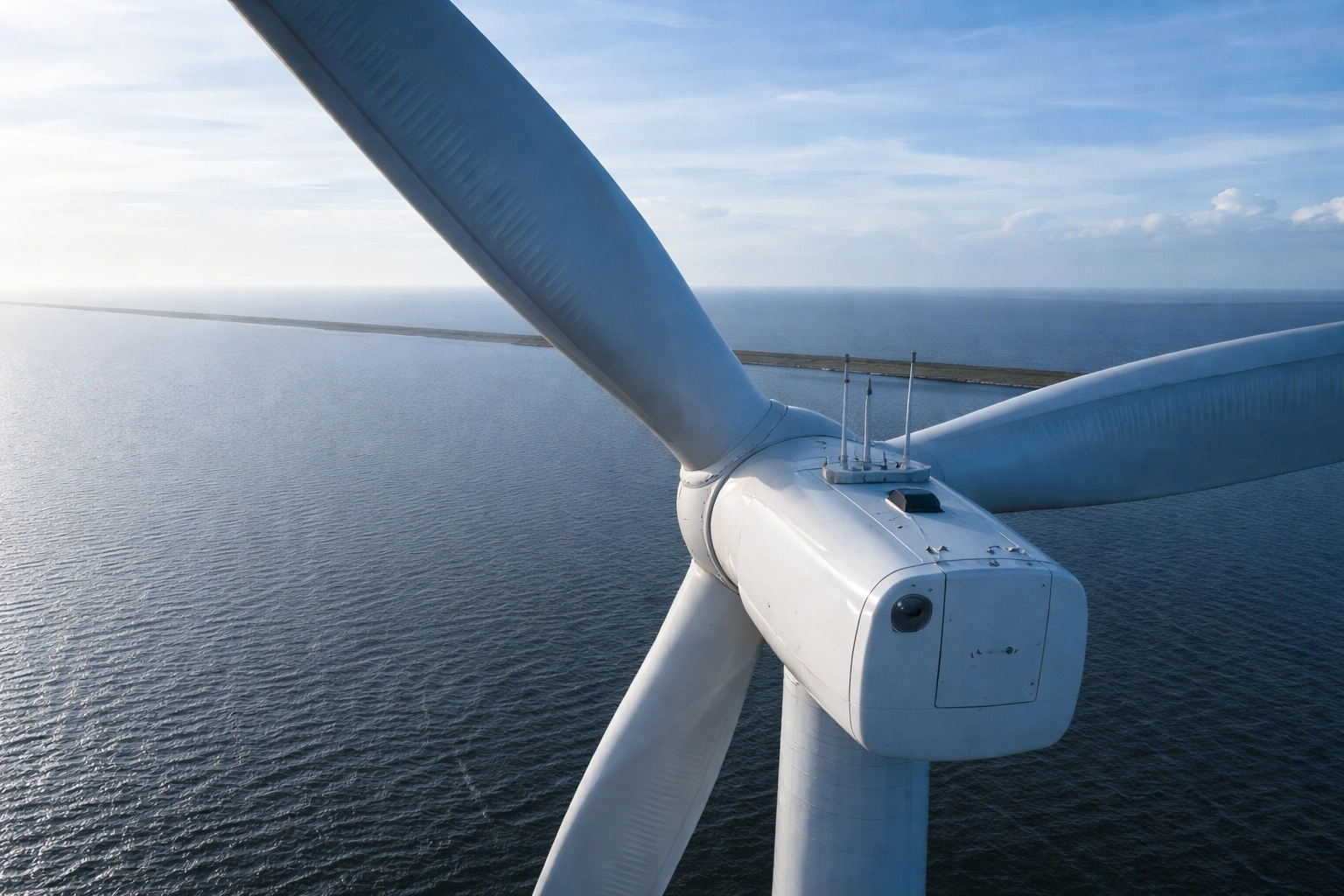
Europe leads global offshore wind deployment, with large-scale installations across the North Sea, Baltic Sea, and Atlantic corridors. Turbine ratings are increasing, installation distances from shore are expanding, and maintenance access windows are narrowing.
In this operating context, offshore wind turbine components must be engineered for structural endurance, corrosion resistance, and integration precision. Marine environments introduce mechanical and environmental stressors that significantly exceed onshore conditions.
Engineering solutions must therefore combine structural fabrication depth, electrical integration readiness, and manufacturing discipline aligned to European offshore standards.
Offshore turbines experience continuous high wind loads, wave-induced tower motion, and dynamic rotor forces. These conditions transmit cyclic stress into nacelle frames, hub assemblies, and internal structural systems.
Critical offshore structural components include:
Fatigue resistance becomes a primary design consideration. Weld integrity, dimensional stability, and machining precision directly influence drivetrain alignment and lifecycle durability.
Unimacts manufactures heavy structural wind turbine components using controlled welding environments and large-format machining systems designed to maintain alignment tolerances across serial production. For offshore applications, structural fabrication incorporates enhanced inspection protocols and corrosion-resistant surface treatments aligned with European standards.
High salinity exposure accelerates material degradation. Offshore components must resist:
Corrosion engineering extends beyond coatings. It includes:
Structural fabrication must account for coating thickness tolerances and assembly interfaces to prevent long-term degradation.
Unimacts integrates surface treatment processes and dimensional validation to ensure offshore components maintain structural integrity while meeting coating specifications required for marine deployment.
Within offshore nacelles, drivetrain systems must remain stable under dynamic loading and platform movement. Larger offshore turbines often use direct-drive generators, increasing structural mass and internal stress.
Mechanical integration requires:
Structural inaccuracies can amplify vibration, increasing wear on bearings and generator components.
Unimacts’ nacelle structural assemblies are produced with alignment-controlled fabrication processes to support drivetrain stability under offshore operating conditions.
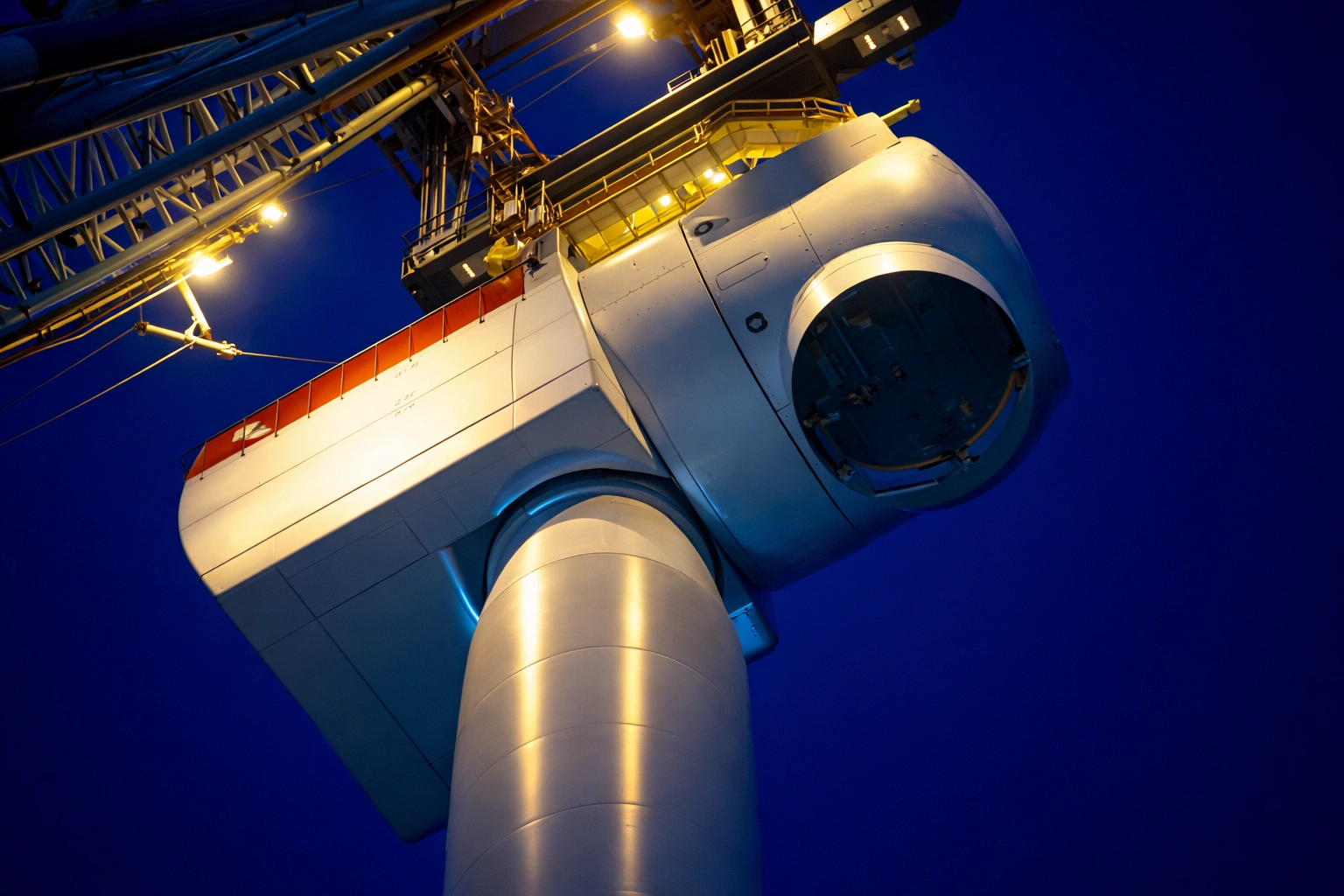
Electrical systems inside offshore turbines must be protected from moisture, condensation, and salt exposure. Offshore nacelles integrate:
These wind turbine electrical components require:
Sheet metal precision plays a critical role in ensuring proper sealing and airflow design.
Unimacts manufactures integration-ready electrical enclosure systems designed to withstand vibration and marine exposure while supporting thermal management and inspection accessibility.
Offshore logistics impose strict dimensional and weight constraints. Components must be engineered for:
Large structural weldments must balance strength with weight optimisation to reduce lifting complexity.
Manufacturing processes must therefore align with transport planning early in the design cycle. Unimacts supports this requirement through program-based fabrication planning that accounts for lifting interfaces, dimensional tolerances, and structural reinforcement requirements.
Offshore wind projects depend on reliable voltage transformation before transmitting power to shore. While primary step-up transformers are located at offshore substations or tower bases, nacelle electrical systems must integrate seamlessly with downstream transformer infrastructure.
Transformer manufacturing, as part of broader wind energy solutions, involves:
Unimacts’ fabrication capabilities extend to transformer structural assemblies, enabling continuity between offshore turbine generation systems and grid integration equipment.
European offshore wind projects operate under rigorous certification frameworks. Manufacturing partners must demonstrate:
Quality governance ensures offshore components maintain performance across extended service intervals.
Unimacts operates with documented quality systems and inspection protocols structured to support audit-ready offshore programs without introducing unnecessary production complexity.
Offshore turbines are designed for 20–25 year operational lifecycles with limited maintenance access. Component design must consider:
Engineering decisions during fabrication influence long-term reliability and total cost of ownership.
By integrating structural precision, corrosion engineering, and electrical enclosure performance, offshore wind turbine components can sustain performance across demanding marine environments.
Europe’s offshore wind expansion continues to push engineering boundaries. Offshore wind turbine components must withstand continuous mechanical stress, corrosive marine exposure, and grid integration demands.
Structural accuracy, corrosion resistance, electrical enclosure performance, and disciplined manufacturing governance define competitive capability in this segment.
Unimacts contributes to offshore wind programs through precision structural fabrication, nacelle component manufacturing, electrical enclosure systems, and transformer-adjacent fabrication aligned to European marine standards.
In a sector where reliability and lifecycle performance determine project economics, engineering-focused manufacturing remains central to offshore wind success.
1. What makes offshore wind turbine components different from onshore components?
Offshore components must resist corrosion, higher dynamic loads, and limited maintenance access.
2. Why is structural precision critical offshore?
Alignment accuracy reduces vibration, fatigue stress, and drivetrain wear over long lifecycles.
3. How are electrical systems protected in offshore nacelles?
Through IP-rated enclosures, corrosion-resistant finishes, and thermal management systems.
4. Do offshore turbines require specialised fabrication standards?
Yes. Marine-grade materials, certified welding procedures, and enhanced inspection protocols are essential.
5. Does Unimacts manufacture offshore wind components?
Yes. Unimacts produces heavy structural assemblies, nacelle components, electrical enclosures, and transformer-adjacent structures for offshore programs.