
Anupreethi
As Europe accelerates onshore repowering and offshore expansion, cost discipline remains central to wind project viability. However, reducing turbine costs requires a detailed understanding of structural engineering, fabrication complexity, electrical integration, and certification requirements.
A comprehensive wind turbine component cost breakdown goes beyond material pricing. It captures fabrication labor, machining precision, corrosion protection, compliance overhead, logistics exposure, and lifecycle risk mitigation.
OEM procurement teams increasingly evaluate manufacturing trade-offs holistically—balancing capital expenditure with long-term reliability and grid compliance.
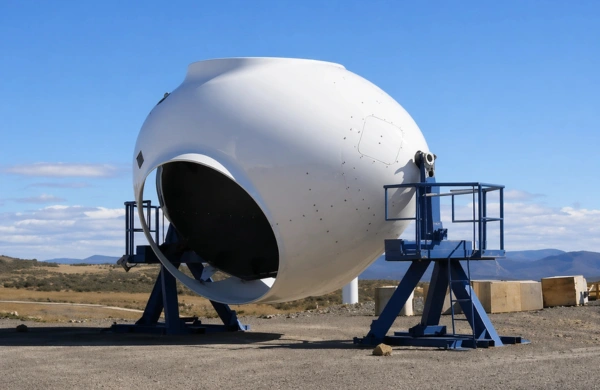
Structural steel represents one of the largest contributors to turbine component cost.
Material-related cost drivers include:
In a wind turbine component cost breakdown, raw material typically represents a substantial percentage of nacelle frames, hub castings, and offshore structural assemblies.
Manufacturing trade-offs include:
Optimising plate thickness and grade selection is a key lever in managing both cost and long-term structural reliability.
Unimacts applies controlled material sourcing and precision fabrication sequencing to reduce scrap rates and minimise rework in heavy structural components.
Welding is a major cost driver in large fabricated wind components.
Within a wind turbine component cost breakdown, welding costs are influenced by:
Offshore components require fatigue-rated welds with enhanced non-destructive testing (NDT), increasing inspection cost but reducing long-term failure risk.
Trade-offs:
Precision-controlled welding environments reduce defect rates and lifecycle warranty exposure.
Large-format CNC machining is essential for:
Machining cost drivers include:
In a wind turbine component cost breakdown, tight tolerances increase machining expense but protect drivetrain alignment and vibration stability.
Trade-offs:
Unimacts integrates machining with structural fabrication workflows to minimise distortion and optimise cycle efficiency.
Offshore wind introduces additional cost layers.
Key offshore elements in a wind turbine component cost breakdown:
Coating systems may represent a smaller percentage of initial cost but have significant lifecycle impact.
Trade-offs:
Marine-grade fabrication processes must account for coating thickness without compromising dimensional accuracy.
Wind turbine electrical components—such as converter cabinets, control panels, and switchgear housings—introduce additional manufacturing cost considerations.
Cost drivers:
Electrical enclosure fabrication must maintain structural stability while accommodating airflow and cable routing.
In the broader wind turbine component cost breakdown, integration-ready enclosures reduce downstream assembly labor and commissioning time.
Unimacts manufactures precision-fabricated electrical cabinet systems aligned with IEC manufacturing frameworks, supporting dimensional consistency and environmental durability.
European wind projects require documented compliance.
Cost contributors include:
In a wind turbine component cost breakdown, certification-related processes represent indirect costs that safeguard turbine reliability.
Trade-offs:
Audit-ready production frameworks reduce project risk and certification delays.
Component weight and geometry directly affect transport cost.
Influencing factors:
Trade-offs:
Manufacturing decisions must account for total installed cost rather than isolated fabrication cost.
European wind markets increasingly prioritise supply chain resilience.
Within a wind turbine component cost breakdown, supply strategy affects:
Localised manufacturing may carry higher labor rates but reduce logistics volatility and improve project predictability.
Structured program-based fabrication planning helps stabilise long-term cost performance.
Beyond turbine structural assemblies, grid integration equipment adds to total system cost.
Transformer-related drivers include:
While not part of the nacelle assembly itself, transformer-adjacent manufacturing influences overall wind project economics.
Integrated structural and electrical fabrication capabilities improve coordination across turbine and grid interface systems.
A wind turbine component cost breakdown reveals that material price alone does not define project economics. Welding complexity, machining precision, offshore corrosion protection, certification governance, electrical integration, and logistics strategy collectively determine total cost.
Manufacturing trade-offs must balance upfront expenditure with long-term reliability, fatigue performance, and grid compliance.
Through precision structural fabrication, electrical enclosure manufacturing, offshore-aligned production processes, and transformer-adjacent capabilities, Unimacts supports European wind programs with disciplined engineering frameworks designed to optimize both cost and lifecycle performance.
In Europe’s competitive wind landscape, sustainable cost control is achieved not through simplification alone—but through engineering precision, structured fabrication governance, and long-term supply alignment.
1. What is included in a wind turbine component cost breakdown?
Materials, welding labor, machining, corrosion protection, certification, logistics, and electrical integration costs.
2. Why are offshore components more expensive?
They require marine-grade materials, advanced coatings, and additional inspection processes.
3. How does machining precision affect cost?
Higher precision increases upfront cost but protects drivetrain alignment and reduces maintenance risk.
4. Do certification requirements impact manufacturing cost?
Yes. Welding qualifications, NDT, and traceability systems add cost but ensure compliance and reliability.
5. How can manufacturers manage cost trade-offs effectively?
By integrating fabrication planning, material optimisation, precision machining, and structured quality governance.